‘The Time for Talk Is Over’: Survivors React to the Missing Women’s Inquiry | The Tyee

‘The Time for Talk Is Over’: Survivors React to the Missing Women’s Inquiry | The Tyee:

Carol Eugene Park: ‘The Time for Talk Is Over’: Survivors React to the Missing Women’s Inquiry. Systemic colonial violence creates genocide against Indigenous Peoples, says final report. he hundreds of recommendations for Canadian society and government by the National Inquiry of Missing and Murdered Indigenous Women and Girls are in response to what is properly called genocide, said a First Nations lawyer at a press conference in Vancouver Monday.

The inquiry report’s use of the term genocide to describe what it called systematic race- and gender-based violence against Indigenous women, girls, trans and two-spirit people was hotly debated on social media since the report’s leak on Friday.

But Sharon McIvor, Nlaka’pamux from the Lower Nicola Indian Band and an activist, lawyer and college professor said, “It was good to acknowledge that what’s been happening for the last 200 years is genocide.”

McIvor said Canada must acknowledge its role in creating and perpetuating the colonial structures that have led to the high murder rates Indigenous women and girls have and continue to face.

“They have a huge role to play to put us where we are, and they have a role to play to get us back from where we are,” McIvor said. “I call on the government to take [the report] seriously and tomorrow make me equal to my male counterparts in law.”

The inquiry’s report, released Monday, is 1,200 pages long and contains 231 recommendations the inquiry says will end violence against Indigenous women, girls and two-spirit people.

The recommendations include calls for action on human rights, policing, the justice system, corrections, health care, education, media, social work and child welfare.

“He gave us this national inquiry of MMIWG,” Williams said. “However, he approved the pipelines to go into Mother Earth, raping her and creating more places for women to go missing and be murdered along these pipelines? It is a known fact that our Indigenous women and girls go missing and are murdered along these pipelines.”

Williams said Trudeau does not represent Indigenous peoples in Canada, or the missing and murdered Indigenous women and girls. “We are the original nations of Turtle Island,” she said.

The introduction to the inquiry’s report reads, “The fact that this National Inquiry is happening now doesn’t mean that Indigenous peoples waited this long to speak up; it means it took this long for Canada to listen.”

But that statement falls short for Summer-Rain Bentham, manager at Battered Women’s Support Services.

“Listening is not action,” she said. “Listening does not stop men from being able to target and harm Indigenous women and girls, trans, and two-spirit with near impunity.”

Bentham said the ongoing disappearance and murder of women and girls since the inquiry’s start three years ago is evidence that Canada is ignoring the genocide against Indigenous women, girls and two-spirit people.

Implementing the calls to justice are the first steps Canada can take to show that “Indigenous women and girls are valuable, sacred,” Bentham said.

“Our sisters and two-spirit relatives who have been missing or murdered — they paid with their lives for this movement. They gave their lives so that we would be able to fight for the safety of other Indigenous women and girls and two-spirit folks…. We have a responsibility to them.”

Grand Chief Stewart Phillip, president of the Union of B.C. Indian Chiefs, was the final speaker to respond to the National Inquiry of Missing and Murdered Indigenous Women and Girls.

He said real change must be fought for, and Canada’s genocidal history described in the report must be acknowledged.

“It’s our responsibility to hold all governments at all levels to account, to ensure that the recommendations of this report do not gather dust on some bureaucratic shelf in Ottawa like the Royal Commission on Aboriginal Peoples,” he said.

Phillip criticized Trudeau for what he said were his lack of concrete solutions to Canada’s genocidal history and present.

“We can’t allow Prime Minister Trudeau to prance in here and offer good intentions,” Phillip said. “We need action. Enough talk, enough consultation. The time for talk is over, now is the time for action. It’s our responsibility to ensure that happens.”

Opinion | Canada finally acknowledged the genocide against Indigenous women. It’s time to act.

Opinion | Canada finally acknowledged the genocide against Indigenous women. It’s time to act.:

 By Courtney Skye     June 4  

Courtney Skye
is Mohawk, Turtle Clan, from Six Nations of the Grand River Territory.
She is a research fellow at Yellowhead Institute, a First Nations-led
policy think tank at the Faculty of Arts, Ryerson University.

This
week, family members of missing and murdered Indigenous women, girls
and Two-Spirit people, survivors of violence, community activists and
Indigenous leaders gathered in Ottawa for the release of “Reclaiming Power and Place: The Final Report of the National Inquiry into Missing and Murdered Indigenous Women and Girls.”
They were there to acknowledge the inquiry’s work in a collective
ceremony to honor the lives of those who have experienced violence. It
was an demonstration of the love that exists within Indigenous
communities for Indigenous women, girls and Two-Spirit people — and a recognition of the overwhelming levels of violence they have had to endure for generations.

The report,
released Monday, finds that “persistent and deliberate human and
Indigenous rights violations and abuses are the root cause behind
Canada’s staggering rates of violence.” The inquiry concluded that
Canada has committed a genocide against the Indigenous peoples within
its colonial borders, and is continuing to maintain systems and
structures that result in Indigenous women, girls and Two-Spirit people
experiencing a disproportionate amount of violence.

Even
with a two-year mandate, the inquiry was unable to determine a
definitive number of Indigenous people who are missing or have been
murdered. But Indigenous women were reported to be at least six times more likely to be victims of homicide than non-Indigenous women.

The new report, which consists of more than 1,200 pages, contains hundreds of calls for justice
that methodically address the interrelated ways Canadian and Indigenous
structures, programs and services must change to promote the
substantive equality of Indigenous women, girls and Two-Spirit people.
These calls include establishing a “National Indigenous and Human Rights
Ombudsperson” and a “National Indigenous Human Rights Tribunal,”
developing and implementing a national action plan, and providing
long-term funding for educational programs and violence prevention
campaigns.

The report affirms what Indigenous
people have long understood — that the violence they experience is a
product of settler colonialism. The continuation of the Canadian settler
state requires the destabilization of Indigenous communities — and a
part of this stabilization has involved rampant gender-based violence to
uphold the legitimacy of the settler state’s rule over land and water.

While
settler colonialism impacts Indigenous peoples of all genders, it makes
women, girls and Two-Spirit people especially vulnerable to violence.
In 1924, the Canadian state imposed a government structure within First
Nations communities, removing their traditional leadership. And since 1876, Canada has enforced the Indian Act, which at times forced “Indian” women out of leadership positions
and removed their legal status if they chose to go to university or
marry a non-Indigenous person, or if their fathers chose to enfranchise
them. The sex-based discrimination in the Indian Act is identified as
one of the root causes of violence toward First Nations women in the
report.

Over time, advancements in the rights of Indigenous peoples have resulted in Supreme Court challenges and findings of discrimination
from international bodies. However, Canada has maintained a state
definition of “Status Indians,” defining membership in communities from
outside the norms and traditions of those people, and has yet to fully
eliminate how these structures perpetuate sex-based discrimination.

The
national inquiry report outlines in great detail how the nature of
settler colonialism in Canada has evolved into an insidious and
distinctly Canadian social reality that ignores reports of brutal
murders and missing persons, even as these numbers reached alarming
levels.

The United Nations Declaration on the
Rights of Indigenous Peoples sets a minimum standard for the recognition
of their collective rights and sees improvement in the lives of
Indigenous peoples as contingent upon their ability to exercise
self-determination. Now, the inquiry’s report makes clear that
responding to the calls for justice and undertaking actions to end
violence require restoring Indigenous jurisdiction in ways that
prioritize the safety of Indigenous women, girls and Two-Spirit people.

For
too long, our communities have feared that shedding light on violence
would undermine Indigenous leadership. Communities have viewed crises as
something that must remain hidden in order for Indigenous structures to
be restored, and enduring the violence we experience has been seen as
the cost of nation-building.

The inquiry has
established that violence in Indigenous communities and the ongoing
refusal to recognize Indigenous-led ways of governance reinforce one
another, to the benefit of the settler state. Immediate action on the
calls for justice is needed in order to protect Indigenous women, girls
and Two-Spirit people. We must be able to not only express our
aspirations openly but also confront our challenges and seek our own
solutions to the issues we face, including gender-based violence. As
Indigenous communities continue to assert their sovereignty, the role of
the paternalistic settler state must be limited and clearly defined.

The
release of the final report marks a pivotal moment in the recognition
and advancement of the individual and collective rights of Indigenous
people. As Indigenous people continue to overcome the violence and
trauma instilled in their communities by a settler state, the inquiry insists
“the exclusion of Indigenous women, girls, 2SLGBTQQIA people, Elders,
and children from the exercise of Indigenous self-determination must
end.” Honoring missing and murdered Indigenous women, girls and
Two-Spirit people requires it.

Why can’t we use the word genocide? | The Star

Why can’t we use the word genocide? | The Star:

By Tanya Talaga
Indigenous Issues Columnist
Mon., June 3, 2019

GATINEAU—Almost four years to the day after the Truth and Reconciliation Commission said Canada committed a cultural genocide against Indigenous people, the national inquiry into our murdered and missing Indigenous women and girls took it a step further.

They said the death of our women, by the thousands, was simply a genocide.

The echo is not coincidental.

The genocidal process was the same.

In the words of the four-person commission, the epidemic of deaths and disappearances is the direct result of a “persistent and deliberate pattern of systemic racial and gendered … rights violations and abuses, perpetuated historically and maintained today by the Canadian state, designed to displace Indigenous people from their lands, social structures and governments, and to eradicate their existence as nations, communities, families and individuals.”

As expected, the protests quickly emerged. This is no “genocide,” the critics said. The coast-to-coast-to-coast commission, which interviewed over 2,000 families, survivors and knowledge keepers, exaggerated or got it wrong. Former aboriginal affairs minister Bernard Valcourt, who served under Stephen Harper, started off the bashing with a bang:

You might be interested in

“What has been the cost to Canadians for this propagandist report?” he tweeted.

For his part, Prime Minister Justin Trudeau refused to say the word “genocide” as he addressed the assembled families, survivors and commissioners.

But those of us who have been on the wrong side of the “persistent and deliberate pattern” know that “genocide” is the right word.

As the ceremony began, it was Chief Commissioner Marion Buller who said the hard truth is that “we live in a country whose laws and institutions perpetuate violations of fundamental rights, amounting to a genocide.”

Buller, the first appointed First Nations female judge in British Columbia, took a lot of heat when the inquiry began. Members of her team were quitting, families weren’t being properly notified or compensated. Many said her mandate was overly narrow. Yet she weathered it all and fulfilled her highest purpose. She gave voice to the victims.

The inescapable conclusion of all their harrowing and beautiful testimony is that “genocide” is the only word for the state-enabled deaths of thousands of sisters, aunties, grandmothers, cousins and friends.

So why won’t our prime minister say it? What’s he afraid of?

Perhaps he understands that calling the genocide a genocide would acknowledge that his government — and others — are morally culpable for the losses of the thousands of our women, girls and 2SLGBTQQIA people. Or maybe it was the legal culpability that worried him; lawyers no doubt advised Trudeau not to say it. The pollsters, too, were probably against it, as we edge towards an election. It isn’t as easy to take a principled stand when votes are potentially at stake.

Whatever his reasons, his omission was telling. But it hardly dampened the power of the day.

“We don’t need to hear the word genocide come out of the prime minister’s mouth because families have told us their truth,” Buller said during the press conference.

The families of the taken, not forgotten women, agree. They don’t need to hear arguments over what constitutes genocide. They know it to be true because they live it.

As the ceremony drew to a close on Monday, Thunder Bay’s Maddy Murray stopped me and asked me to remember Alinda Lahteenmaki, who died in Winnipeg on Jan. 30, 2009 after plunging 11 storeys. She was 23 years old and her boyfriend pleaded guilty to manslaughter.

“There is no closure,” she said to me as the drums began to beat the warrior song.

But there can be an end to the violence.

The murders and rapes, the violence against Indigenous women and girls will continue until Canada confronts the genocide and the long-promised new relationship is finally delivered.

This requires that Canada confront the historical disadvantages, intergenerational trauma, and discrimination experienced by Indigenous people, the report explained. And that begins with making significant strides toward substantive equality through changes to our justice system, to policing, to social and health services, to education, to everything Canada prides itself on and holds dear.

To many, these institutions are a symbol of what makes Canada great. But the report makes clear that they are far from perfect. That they are rigged against Canada’s first peoples. That they are tools of colonial violence, of genocide.

That is the conclusion of Buller and her team of commissioners.

It is disappointing that many of our politicians refuse to say the word. It would be far worse — a terrible tragedy — if they continued to be complicit in the act.

Tanya Talaga is a Toronto-based columnist covering Indigenous issues. Follow her on Twitter: @tanyatalaga

PEI: Green Wave Rising

PEI Greens 2019 : Members of the Legislative Assembly | Peter Bevan-Baker in New Haven—Rocky Point | Hannah Bell in Charlottetown—Belvedere | Lynne Lund in Summerside—Wilmot | Trish Altass in Tyne Valley—Sherbrooke | Michele Beaton Mermaid—Stratford | Karla Bernard in Charlottetown—Victoria Park | Steve Howard in Summerside—South Drive | Ole Hammarlund Charlottetown—Brighton |
results via CBC

Back in 2015, Peter Bevan-Baker was the first Green ever elected in PEI.  It was only the second time any third party had ever won a seat in PEI.

Then, in a 2017 by-election, Hannah Bell won a second Green seat.

I’m not a big believer in Opinion Polls in politics.  Parties used to do them as research, to get a feel for how voters felt, and to get an idea which way they might vote (and what they could change to get voters to vote for their party).   Largely because I think they’re misused.  But it’s a good bet the only Opinion Polls we see today are only the ones whoever paid for them wants us to see.  They are used as advertising.  Propaganda to convince us how to vote.   And in these days of decimated news rooms, main stream media outlets have taken to writing entire articles about Opinion Poll results: they’re treated as news by the main stream media.

The only Opinion Poll that counts is the one on Election Day.   Even so, for the last year or so, the third party Greens have been consistently polling ahead of PEI’s Liberal Government.  That’s not a single Opinion Poll, it’s a trend— and in a traditionally 2 party province.   Clearly such a trend is a strong indication that voters are looking for change.

This trend made people start thinking and talking about the unthinkable… what if the upstart Greens, going into the election with only 2 MLAs — were to come out the other side with enough support to form government?  Pretty wild idea, right?

Firsts

Last night, PEI Greens MLA’s Peter Bevan-Baker and Hannah Bell were both re-elected to the Legislative Assembly of Prince Edward Island.  That was the first time any third party MLA had ever been re-elected in PEI.

It was also the first time a third party became a second party in PEI.  The Greens are likely to form the Official Opposition (at minimum).

Although the Greens didn’t win enough seats (14) to claim a majority, they did win 8 seats.  Clearly a Green record for Canada.

A clear majority— five of the eight elected Greens— are women.  I understand no PEI party has ever managed anything like this before.

Added to the single female PC candidate, that makes six: a record number women sitting MLAs in PEI.  Another First.

 2019 Prince Edward Island General Election Result Chart | Colour: Blue | Progressive Conservative - Leader Dennis King | 26 Candidates | 8 seats in 2015 | 8 seats at the dissolution of the legislature | 12 seats in 2019 | +4 | 29,333 votes | 36.52% Change -0.88 | Colour: Green | Green Party of PEI | Leader Peter Bevan-Baker | 26 Candidates | 1 seat in 2015 | 2 seats at the dissolution of the legislature | 8 seats in 2019 | +6 | 24,591 votes | 30.62% | Change +19.81 | Colour: Red | Liberal - Leader Wade MacLauchlan | 26 Candidates | 18 seats in 2015 | 16 seats at the dissolution of the legislature | 6 seats in 2019 | -10 | 23,711 votes | 29.52% | Change -11.31 | Colour: Orange | New Democratic - Leader Joe Byrne | 23 Candidates | 0 seats in 2015 | 0 seats at the dissolution of the legislature | 0 seats in 2019 | -- | 2,402 votes | 2.99% | Change -7.98 | Colour: Grey | Independent | 3 Candidates | 0 seats in 2015 | 1 seat at the dissolution of the legislature | 0 seats in 2019 | -1 | 282 votes | 0.35% | Change +35 | Colour: White | Vacant | 0 seats at dissolution | 1 Seat in 2019 | TOTAL 104 Candidates | 2015: 27 seats | dissolution: 27 seats | 2019 27 seats | Popular Vote: 80,319 | 100% |
Wikipedia: 2019 Prince Edward Island General Election

Now What?

The ruling Liberals dropped to third place.  The PEI Progressive Conservative Party had gone through 5 leaders in 5 years, but 2 months before this election, they chose a new leader.  Under Dennis King’s leadership, the PC’s won 12 seats, two shy of a majority, but certainly enough for a minority government if he can get the Confidence of the House.  The CBC commentators talked about how Mr King’s leadership style had contributed to the civility of the election.  Listening to his own post election speech, peppered with words like collaboration and sustainability, he seems to be an old style PC, and it sounds as though the reimagined PC party will actually be both progressive and conservative under his leadership.

But its early days; we will need to see how it unfolds.

Under Westminster rules, Liberal Premier Wade MacLauchlan will be given an opportunity to win the confidence of the house.  This seems unlikely as the outgoing Premier was unable to retain his own seat, and his party is down to 6 MLAs.

More likely possibilities are that Dennis King’s PCs could form an actual minority government on their own.  Or his PCs could forge a Confidence and Supply Agreement with the Greens.  Or the Liberals to ensure electoral stability for the next 4 years.   Or the PCs could join with another party to form a ruling coalition.

Just as the Greens and Liberals could form a majority ruling coalition.  My best guess is the PEI Greens won’t join a coalition with anyone; they’ve worked too hard to build a viable third party to turn PEI back into a 2 party province.

Is it really a Green wave sweeping the country?  It sure looks like it.  But if we had some form of Proportional Representation, there would be many more Green MPs in Parliament.  Nearly a million voters voted Green federally in 2008.  And not a single Green was elected that year.  The GPC hasn’t earned that many votes since.   That doesn’t mean those Green voter stopped being Green, they just stopped voting Green because voting Green wasn’t effective.  So maybe it isn’t a “Green Wave” … maybe it’s just a case of the people who want to vote Green actually voting Green.  Because they believe in the policy that’s been formed out of Green values.  And they believe in the candidates who would best represent them.

However it plays out, it will be interesting.   Go Greens!

Hannah Bell and Peter Bevan Baker at the 2018 Guelph Green Party Convention

More Reading: Tragedy and politics on Prince Edward Island

PEI: Green Wave Rising

PEI Greens 2019 : Members of the Legislative Assembly | Peter Bevan-Baker in New Haven—Rocky Point | Hannah Bell in Charlottetown—Belvedere | Lynne Lund in Summerside—Wilmot | Trish Altass in Tyne Valley—Sherbrooke | Michele Beaton Mermaid—Stratford | Karla Bernard in Charlottetown—Victoria Park | Steve Howard in Summerside—South Drive | Ole Hammarlund Charlottetown—Brighton |
results via CBC

Back in 2015, Peter Bevan-Baker was the first Green ever elected in PEI.  It was only the second time any third party had ever won a seat in PEI.

Then, in a 2017 by-election, Hannah Bell won a second Green seat.

I’m not a big believer in Opinion Polls in politics.  Parties used to do them as research, to get a feel for how voters felt, and to get an idea which way they might vote (and what they could change to get voters to vote for their party).   Largely because I think they’re misused.  But it’s a good bet the only Opinion Polls we see today are only the ones whoever paid for them wants us to see.  They are used as advertising.  Propaganda to convince us how to vote.   And in these days of decimated news rooms, main stream media outlets have taken to writing entire articles about Opinion Poll results: they’re treated as news by the main stream media.

The only Opinion Poll that counts is the one on Election Day.   Even so, for the last year or so, the third party Greens have been consistently polling ahead of PEI’s Liberal Government.  That’s not a single Opinion Poll, it’s a trend— and in a traditionally 2 party province.   Clearly such a trend is a strong indication that voters are looking for change.

This trend made people start thinking and talking about the unthinkable… what if the upstart Greens, going into the election with only 2 MLAs — were to come out the other side with enough support to form government?  Pretty wild idea, right?

Firsts

Last night, PEI Greens MLA’s Peter Bevan-Baker and Hannah Bell were both re-elected to the Legislative Assembly of Prince Edward Island.  That was the first time any third party MLA had ever been re-elected in PEI.

It was also the first time a third party became a second party in PEI.  The Greens are likely to form the Official Opposition (at minimum).

Although the Greens didn’t win enough seats (14) to claim a majority, they did win 8 seats.  Clearly a Green record for Canada.

A clear majority— five of the eight elected Greens— are women.  I understand no PEI party has ever managed anything like this before.

Added to the single female PC candidate, that makes six: a record number women sitting MLAs in PEI.  Another First.

 2019 Prince Edward Island General Election Result Chart | Colour: Blue | Progressive Conservative - Leader Dennis King | 26 Candidates | 8 seats in 2015 | 8 seats at the dissolution of the legislature | 12 seats in 2019 | +4 | 29,333 votes | 36.52% Change -0.88 | Colour: Green | Green Party of PEI | Leader Peter Bevan-Baker | 26 Candidates | 1 seat in 2015 | 2 seats at the dissolution of the legislature | 8 seats in 2019 | +6 | 24,591 votes | 30.62% | Change +19.81 | Colour: Red | Liberal - Leader Wade MacLauchlan | 26 Candidates | 18 seats in 2015 | 16 seats at the dissolution of the legislature | 6 seats in 2019 | -10 | 23,711 votes | 29.52% | Change -11.31 | Colour: Orange | New Democratic - Leader Joe Byrne | 23 Candidates | 0 seats in 2015 | 0 seats at the dissolution of the legislature | 0 seats in 2019 | -- | 2,402 votes | 2.99% | Change -7.98 | Colour: Grey | Independent | 3 Candidates | 0 seats in 2015 | 1 seat at the dissolution of the legislature | 0 seats in 2019 | -1 | 282 votes | 0.35% | Change +35 | Colour: White | Vacant | 0 seats at dissolution | 1 Seat in 2019 | TOTAL 104 Candidates | 2015: 27 seats | dissolution: 27 seats | 2019 27 seats | Popular Vote: 80,319 | 100% |
Wikipedia: 2019 Prince Edward Island General Election

Now What?

The ruling Liberals dropped to third place.  The PEI Progressive Conservative Party had gone through 5 leaders in 5 years, but 2 months before this election, they chose a new leader.  Under Dennis King’s leadership, the PC’s won 12 seats, two shy of a majority, but certainly enough for a minority government if he can get the Confidence of the House.  The CBC commentators talked about how Mr King’s leadership style had contributed to the civility of the election.  Listening to his own post election speech, peppered with words like collaboration and sustainability, he seems to be an old style PC, and it sounds as though the reimagined PC party will actually be both progressive and conservative under his leadership.

But its early days; we will need to see how it unfolds.

Under Westminster rules, Liberal Premier Wade MacLauchlan will be given an opportunity to win the confidence of the house.  This seems unlikely as the outgoing Premier was unable to retain his own seat, and his party is down to 6 MLAs.

More likely possibilities are that Dennis King’s PCs could form an actual minority government on their own.  Or his PCs could forge a Confidence and Supply Agreement with the Greens.  Or the Liberals to ensure electoral stability for the next 4 years.   Or the PCs could join with another party to form a ruling coalition.

Just as the Greens and Liberals could form a majority ruling coalition.  My best guess is the PEI Greens won’t join a coalition with anyone; they’ve worked too hard to build a viable third party to turn PEI back into a 2 party province.

Is it really a Green wave sweeping the country?  It sure looks like it.  But if we had some form of Proportional Representation, there would be many more Green MPs in Parliament.  Nearly a million voters voted Green federally in 2008.  And not a single Green was elected that year.  The GPC hasn’t earned that many votes since.   That doesn’t mean those Green voter stopped being Green, they just stopped voting Green because voting Green wasn’t effective.  So maybe it isn’t a “Green Wave” … maybe it’s just a case of the people who want to vote Green actually voting Green.  Because they believe in the policy that’s been formed out of Green values.  And they believe in the candidates who would best represent them.

However it plays out, it will be interesting.   Go Greens!

Hannah Bell and Peter Bevan Baker at the 2018 Guelph Green Party Convention

More Reading: Tragedy and politics on Prince Edward Island

A statement from PEI Greens Peter Bevan-Baker

On The Loss of a Friend

CHARLOTTETOWN – It is with the deepest sadness that Green Party leader, Peter Bevan-Baker issued the following statement:

“As Leader of the Green Party of Prince Edward Island, I was bereft to learn about the death of Josh Underhay and his son in a tragic accident today.

“Josh has been a dear friend and colleague of mine for many years, as a volunteer, musician, passionate cycling advocate and Green Party supporter. He has touched the lives of everyone who knew him, including the students he taught, fellow musicians, and members of the party. Whether advocating for proportional representation, dazzling us with his mastery of languages, or being there to support fellow candidates, Josh brought humour, enthusiasm and boundless energy to every situation.

“I simply cannot imagine how much he will be missed.

Peter Bevan-Baker and Josh Underhay

“Our thoughts and prayers are with his family and friends, and I know we will all join together to provide each other with support and comfort during this terrible time.”

All Green election activities will be suspended for the remainder of the campaign.

We ask all media to respect the privacy of the family at this time. Please direct all media inquiries to Green Party of PEI Director of Communications Shannon Carmont.


You can help Josh Underhay’s family by donating to the GoFundMe:
https://www.gofundme.com/raise-money-for-the-family-of-josh-underhay

temporarilypermanenturl: benwinstagram: kanyolo: nuggetfucker98…

temporarilypermanenturl:

benwinstagram:

kanyolo:

nuggetfucker98:

legalizeact:

#SaveTheTrees

I feel like an important message is trying to be communicated to me but I have no idea what it is

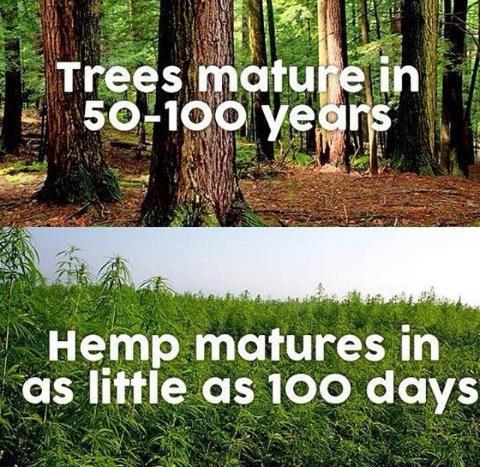
Our forests are being cut down 3x faster than they can grow! One acre of hemp produces as much cellulose fiber pulp as 4.1 acres of trees!!! This is super useful for so many things, especially paper production! In addition, hemp takes in carbon dioxide 4x as fast as trees do, which makes it especially valuable in the act of reducing CO2 emissions/greenhouse gases! 🌲🌲🌲 source 

#the scope of the anti-hemp conspiracy in the united states is terrifying once you start doing research tbh#like it was initially smeared/banned bc lumber lobbyists pushed for it to be…#and a major smear tactic was to associate it with black people#who now a hundred years later are the ones primarily being imprisoned for it#and the plant itself has now been inextricably linked to the drug so people won’t even allow for it to be grown for commercial purposes#like paper making (via literallyfuckeveryone)

Important reminder that industrial hemp can’t be used as a recreational drug, so if anyone tries to pull that card you can just stop them then and there. There are no real arguments against using industrial hemp, even if you’re rigidly against the legalization of any recreational drugs.

After a Vancouver race riot, Oriental business owners including opium den owners had the temerity to apply to the federal government for restitution. In reply, Canada launched the original war on drugs.  

Although a recognized medicinal ingredient (with therapeutic usage going back thousands of years) there has always been a great mystery around the fact Cannabis was suddenly added to the schedule of illegal drugs without a word of discussion(or even identifying it by name!) as a last minute addition to a law. 
https://wrgreens.wordpress.com/2017/11/20/why-is-cannabis-illegal/

At the time, Cannabis was so much a Canadian non-issue that it wouldn’t actually become a problem until half a century later in the 1960s.

Absent evidence or justification, there are many theories why this happened.  The one that strikes me as most likely is that knocking out cannabis eliminated the sturdier hemp based paper, effectively granting Canada’s fledgling wood fiber pulp and paper industry monopoly status.

Cellophane was made from hemp; eliminating plastic wrap is a great idea.

temporarilypermanenturl: benwinstagram: kanyolo: nuggetfucker98…

temporarilypermanenturl:

benwinstagram:

kanyolo:

nuggetfucker98:

legalizeact:

#SaveTheTrees

I feel like an important message is trying to be communicated to me but I have no idea what it is

Our forests are being cut down 3x faster than they can grow! One acre of hemp produces as much cellulose fiber pulp as 4.1 acres of trees!!! This is super useful for so many things, especially paper production! In addition, hemp takes in carbon dioxide 4x as fast as trees do, which makes it especially valuable in the act of reducing CO2 emissions/greenhouse gases! 🌲🌲🌲 source 

#the scope of the anti-hemp conspiracy in the united states is terrifying once you start doing research tbh#like it was initially smeared/banned bc lumber lobbyists pushed for it to be…#and a major smear tactic was to associate it with black people#who now a hundred years later are the ones primarily being imprisoned for it#and the plant itself has now been inextricably linked to the drug so people won’t even allow for it to be grown for commercial purposes#like paper making (via literallyfuckeveryone)

Important reminder that industrial hemp can’t be used as a recreational drug, so if anyone tries to pull that card you can just stop them then and there. There are no real arguments against using industrial hemp, even if you’re rigidly against the legalization of any recreational drugs.

After a Vancouver race riot, Oriental business owners including opium den owners had the temerity to apply to the federal government for restitution. In reply, Canada launched the original war on drugs.  

Although a recognized medicinal ingredient (with therapeutic usage going back thousands of years) there has always been a great mystery around the fact Cannabis was suddenly added to the schedule of illegal drugs without a word of discussion(or even identifying it by name!) as a last minute addition to a law. 
https://wrgreens.wordpress.com/2017/11/20/why-is-cannabis-illegal/

At the time, Cannabis was so much a Canadian non-issue that it wouldn’t actually become a problem until half a century later in the 1960s.

Absent evidence or justification, there are many theories why this happened.  The one that strikes me as most likely is that knocking out cannabis eliminated the sturdier hemp based paper, effectively granting Canada’s fledgling wood fiber pulp and paper industry monopoly status.

Cellophane was made from hemp; eliminating plastic wrap is a great idea.