Mental Crop Rotation
When farmers grow the same crop too many years in a row, it can leave their soil depleted of minerals and other nutrients that are vital to the health of their fields.
To avoid this, farmers will often alternate the crops that they grow because some plants will use up different minerals (such as nitrogen) while other plants replenish those minerals. This process is known as “crop rotation.”
So the next time you find that you need to step away from a project to work on something else for a while, don’t beat yourself up for “quitting” that project. Give yourself permission to practice “mental crop rotation” to maintain a healthy brain field.
Because I’ve found that when that unnecessary guilt and pressure are removed from the process, a good mental crop rotation can help you feel more energized and invigorated than ever once you’re ready to rotate back to that project.
This is extremely good advice that I know I’ve had to do a lot in the past, and I’ve found it incredibly helpful.
Author: Laurel L. Russwurm
existential-celestial: A warbler is released from the ringing…

knight-errant-of-chaos: Before reblogging there was the printing press. The printing press was…
Before reblogging there was the printing press. The printing press was invented because Medieval writers were tired of only getting 6 notes (2 from porn monks) on their text posts.
“I felt a weariness in me so great I thought I would sink into the earth.”
“I felt a weariness in me so great I thought I would sink into the earth.”
– Madeline Miller, Circe.
Medieval Readalong: Guinevere
I didn’t plan to have a weekly feature about the ladies of Malory, but hey, let’s see how far we can go with this! I’m particularly interested in exploring Guinevere because Malory changes so much about her, and because so much about her has, of course, been changed in receptions and adaptations since.
A short version of the Guineveres Malory was working with: Geoffrey of Monmouth had made her part of the (sub-)Roman elite, chosen by Arthur for her beauty, but also a woman who would betray him sexually and politically, committing adultery with Mordred and setting up as queen in her own right with Mordred at her side. Chrétien de Troyes introduced Lancelot to the mythos, made him Guinevere’s lover instead of Mordred, and made Guinevere the ideal mistress of the courtly romance tradition.
Malory (I argue) gives Guinevere more depth, but at least in her introduction in Book IV, she’s still a bit of an enigma. Arthur is deeply in love with her, and has been for a long time. We don’t know the contexts in which they’ve met before; we just know this. And “there as a man’s heart is set, he will be loath to return,” as Merlin says. Also, and to me poignantly, Arthur loves her because she is valiant, as well as because she is fair. What we do not know is how Guinevere feels about all this. Arthur says that nothing is as welcome to him as she is. She says… nothing. Tennyson, of course, makes much of this.
What we do get, over the course of the comparatively brief Book IV, is Guinevere being given authority within the court, and then claiming such authority herself, as well as taking joint agency with Arthur. At the conclusion of the first quest ordained at the marriage feast, it is Guinevere who makes ordinance concerning Gawaine’s proper recompense. After the second quest, we are told that the king and queen 1) ask Sir Tor to tell them what happened 2) make great joy when he has told them. And at the end of the third quest, we not only get this linking of Arthur and Guinevere, but also Guinevere’s own voice in the court, and not only that, but her speaking openly and frankly. And the oath of all the knights of the Table Round includes a version of the ordinance she laid on Sir Gawaine.
So we are shown (not told) that Guinevere becomes Arthur’s active partner in presiding over the affairs of the court, and that she seems to adapt to it readily and well. We know that she is valiant. Merlin has told Arthur that “Lancelot should love her, and she him again.” But this is not foreknowledge that Guinevere has. So what does she make of this new community, her new power, her new husband?
…Part of me has maybe not shaken off the version of King Arthur I had when I was 5 (Blanche Winder’s) in which Guinevere was joyful as well as beautiful and loved.
hedgehog-moss: I recently told my librarian that late Thursday afternoons are a special time in my…
I recently told my librarian that late Thursday afternoons are a special time in my week because Friday is my library day, so I often end up like “ahhh I still haven’t finished my library books!!” the day before, and then I have no choice but to sit down and read no matter how much work I have to do. And she was like “aw but you can return some books late, you know I don’t mind at all!” and I paused then repeated “and then I have no choice but to sit down and read no matter how much work I have to do” and she said “OH!! Our deadlines are very strict actually. Yes… just remembered the huge fine.”
“So on the morn there fell new tidings and other adventures.”
“So on the morn there fell new tidings and other adventures.”
– Thomas Malory, Le Morte d’Arthur.
alraunahomestead: FromtheBlueMountains Wife. Mother. Fiber…
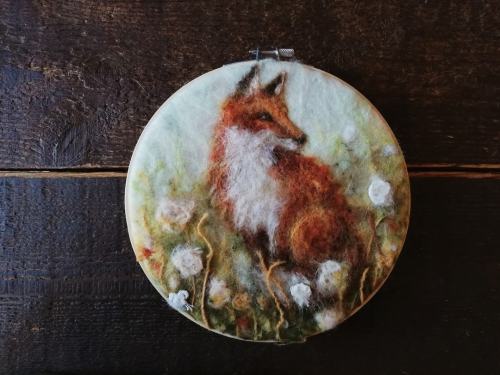
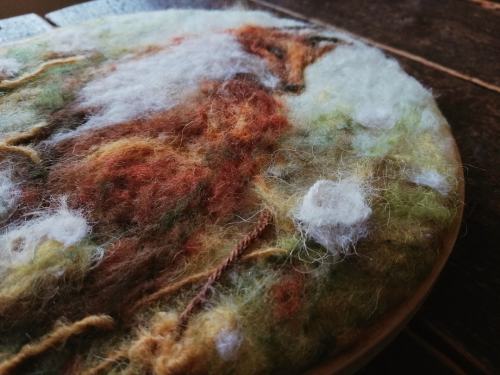
Reading about the early history of printing in the 15th century but I keep getting distracted and…
Reading about the early history of printing in the 15th century but I keep getting distracted and giggling because the guy who succeeded the famous William Caxton after he introduced the printing press to England was called Wynkyn de Worde. Wynkyn de Worde! And he was a printer/publisher! There seems to be some debate about the name’s origin and he might actually have been John/Johannes/Jan Wynkyn but, still, what a fantastically appropiate name!
Remember eating out?

Remember eating out?