A decade ago, when there were still people laughably insisting that the
internet was the worst thing that ever happened to musicians, I kept
pointing out examples of artists who were creatively embracing the
internet to great success – connecting with fans, building new business
models, and succeeding. And every time I did that, people would
complain that this example was an “exception” or an “anomaly.” And, they
had a habit of qualifying any success story – even if the
qualifications were contradictory. For example, if I highlighted an
independent artist’s success, people would say “well, that’s just a
small independent artist, they have nothing to lose, no big rock star
could ever succeed that way.” And then, when I’d highlight a big rock
star having success embracing the internet, I’d be told “well, it’s easy
for him, he already had a huge following.” It got so silly that back in
2008 one of our commenters coined “Masnick’s Law” to describe this phenomenon:
Masnick’s Law states that in any conversation about musicians doing
something different to achieve fame and/or fortune someone will
inevitably attempt to make the argument that “it only worked for them
because they are big/small and it will never work for someone who is the
opposite,” no matter how much evidence to the contrary might be readily
available.
Over the past few years, I thought this kind of “exception” thinking had
mostly died out, but it showed up again recently. We posted famed
science fiction author Ken MacLeod’s excellent opinion piece
arguing that, even though he’s a big supporter of copyright and against
anyone pirating his books, he’s absolutely against the EU’s plans for
Article 11 and Article 13 in the EU Copyright Directive. The key line:
“Far greater than my interest in copyright is my interest in a free and
open internet – or, failing that, in keeping the internet as free and
open as it is now.”
Straw-man argument, since he has a big publisher to both pay him and
defend his property rights. He’s not an indie who markets his own work
on the internet and has to fight mass piracy on his own. He doesn’t need
copyright protection when he has distribution sending his fans to pay
for his work (while the same fans might pirate the indies).
He is the one who wants big publishers to continue to dominate and
profit, while the indies want direct access to the public and the
elimination of the middleman that is this man’s meal ticket.
Of course, that’s nonsense. That comment is based on the idea that you
need to “fight” mass piracy, rather than looking for ways to build a
successful business model that involves connecting with your true fans.
And, of course, the impact on independent artists will be even more
serious than those signed to big publishers/labels/studios/etc. Indeed,
Ken’s own Twitter feed pointed me to an independent musician in the UK,
Stephen Blythe, who has written about why Article 13 will make life worse for him
as an independent musician. After detailing his situation as a
musician, he explains that if you want to get your music out there, so
that you can build a fanbase, you need to get your music onto the “most
popular music” sites. And to do that you have to use a special third party:
If an independent artist wants to get their music out there into the
world, to the most popular music sharing sites, they need to use some
kind of recognised distributor – as direct submissions are either
impossible, or extremely restricted. A pile of these have sprung up,
including Amuse, RouteNote, DistroKid, etc. Some charge a subscription
fee per year, some take a cut of any revenue generated, and some of them
don’t even have a website – operating just from an app. The concept is
simple: You send your music to them, and they distribute it digitally to
the various partners. One of these partners is YouTube.
But it turns out that those services, as part of their “value add” will “enforce copyright” for you:
What isn’t made clear by these distribution networks is that by
submitting your music to YouTube, you essentially give the distributor a
licence to enforce your copyright on the platform using the ContentID
system. This automatically detects any music uploaded along with a
YouTube video (including short clips), and flags it up as unauthorised.
To many this might sound great. Stop people stealing your stuff!
The problem of course is that there is very often no way to denote
authorised uses or channels with these common distribution services.
He then details two separate scenarios of artists being harmed by this
kind of “enforcement” including one that happened directly to himself:
An artist (A) is asked by a fellow musician (B) if they would be
interested in a collaboration. The process is simple: B will supply A
with some vocal samples that A can then chop up and use however they
wish. A gladly accepts, and comes up with a whole electronic composition
that brings the vocals to life. B loves the track, and asks if they can
use it on their upcoming DIY release. A agrees. B’s friend runs a small
label who agrees to put out the album, and they use a distribution
service which sends the album to all the major partners automatically –
including YouTube’s ContentID system. A few years later, A is producing
short video blogs and decides to use one of their old tracks as
background music. It gets flagged up as a copyright violation
automatically, which A disputes – but the appeal is rejected by the
distributor, who has no knowledge of how the track came about in the
first place.
He then explains that in a world where everything involves a massive
ContentID-like filter, you create a terrible situation for independent
musicians, who are at the mercy of much larger companies with no
flexibility:
Independent musicians are at the mercy of a system which locks them
out from negotiating their own contracts without major label backing,
and they therefore have to rely on gatekeepers which provide an
inadequate level of information and control over their own music.
Artists who are starting out lack the information required in order
to make informed decisions about their interaction with such services,
and can inadvertently give away their ability to exploit their creations
commercially due to how the systems are constructed.
The ContentID approach to copyright enforcement gives huge clout to
the first entity to register a piece of work within their system – which
is rarely going to be the artist themselves.
This model has no room for the ad-hoc, informal, and varying ways in
which independent musicians create and share their works online.
Or, in short:
The current ContentID system works on a first-come, first-served basis.
It puts huge power in the hands of intermediary distribution services
which do not provide a service that can ever give artists the amount of
control over their licenses they would require to fully exploit their
creations. The nature of the beast means that informal collaborations
between like-minded folks can unexpectedly tie up their creative
expression years down the road. Article 13 will only expand these
systems, which will inevitably be less sophisticated on other platforms
than ContentID. Independent artists lose the ability to share their work
even further.
I’d argue it goes much further than that. First, the major record labels see everything stated in the paragraph above as a benefit of Article 13.
Giving huge power to the middlemen gatekeepers puts them back in the
position they were in year’s ago, where they get to decide who gets
distribution and who doesn’t. That system created a world in which
musicians had to hand over their copyright and nearly all of the revenue
generated from their works in exchange for a pittance of an advance
(which was really just a loan). So, putting more gatekeeper power back
in their hands is the goal here.
Second, and even more concerning, is that Article 13 is premised on only
the largest platforms being able to comply – meaning that there will
be less competition on the platform side and fewer and fewer places
for independent artists to distribute their work, should they wish to
do so. That gives them fewer options and less ability to build a
fanbase, unless they get plucked out of obscurity by a giant gatekeeper
(again, going back to the way things were a couple decades ago).
Now, I’m sure that someone will pop into the comments and point out that
this example doesn’t count because it’s just a “small, independent
artist,” and that his concerns don’t matter to “real” artists (meaning
major label ones), but, haven’t we played that game long enough?
“The Gentle Author” is the maintainer of Spitalfields Life,
a blog that has featured a brilliant and moving series of essays about
the history of East London; Author is also sharply critical of the plans
by giant property developer Crest Nicholson to redevelop the site of a
Victorian chest hospital and dig up an ancient tree called the Bethnal
Green Mulberry.
Gentle Author was surprised to learn that his sworn enemies at Crest
Nicholson had used one of his photos of the endangered Bethnal Green
Mulberry – the very tree they were planning to kill – in the
promotional materials they were using to sell the plan, as part of a
false narrative about the history of the tree, downplaying the damage
their plans would do.
So Gentle Author wrote to the company and informed them that their use
– which is hard to square with even the most expansive views of UK Fair
Dealing under copyright – infringed his rights, and asked them to pay a
fee, to withdraw their leaflets, to cease displaying it at their
exhibition, and to never use it again.
Then, Kevin Maguire, Company Secretary to Crest Nicholson wrote back and
said, essentially, “Sure, we’ll pay you, but we demand confidentiality
about this ‘license fee’ and you have to swear that you’ll stop
criticising our plan to knock down the tree whose picture we took from
you without asking for permission.”
So Gentle Author, who never offered confidentiality and has no intention
of being bullied, published Maguire’s letter and their amazing, blazing
response, which includes this lovely phrase: “You underestimate me if
you think that I will permit you to gag me by making it a condition of
payment.”
When I went to see Tangled with my family, I was terrified of having to talk about the movie afterwards because I related so much to Rapunzel, and I was sure my mom would hate the movie because it was so obvious that she was exactly like mother gothel. So when mom asked me afterwards if I liked it I gave a tepid non-answer. But then my mom started talking about how she loved the movie! And it slowly dawned on me that she also saw mother gothel as evil and abusive, but somehow didn’t make the connection that she and her were the same. My mom even made a comment to the effect of how, like rapunzel’s real mom, her love for me would always triumph or whatever. And she didn’t get it!
She didn’t see the similarities of how she locked me away in the house, or how she kept me under the tightest supervision under the guise of keeping me safe. I spent the entire mother knows best song stealing glances at her next to me in the theater just waiting for her to drag us out of the movie because she couldn’t stand to have her “love” portrayed as evil. And she didn’t see how the fact that she created her identity completely around being a mother and nothing else was like mother gothel’s dependency on rapunzel’s magic hair.
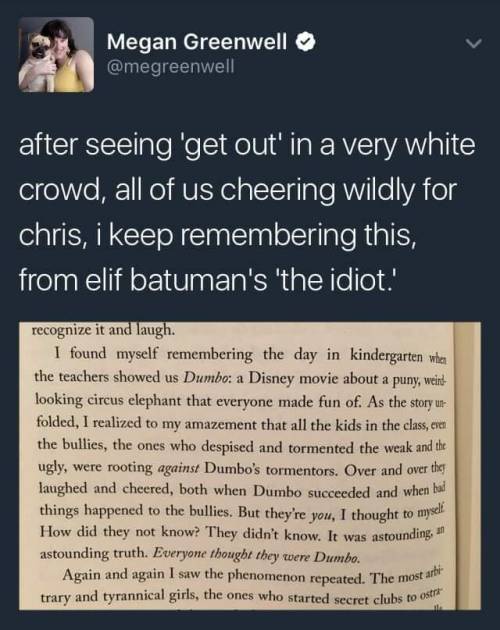
It was only after seeing her positive reaction to the movie, that I really understood the meaning of the phrase “everyone is the hero of their own story”. No one actually thinks they’re the villain, even if confronted with a painfully obvious rendering of their own actions done by someone they agree is rightly portrayed as evil.
“everyone is the hero of their own story”. No one actually thinks they’re the villain, even if confronted with a painfully obvious rendering of their own actions done by someone they agree is rightly portrayed as evil.
Excitement in the Green community is at an all time high: the Green movement is growing. You may already be part of it without even realizing it! Every conversation you have about our communities, economies, and environment builds the impetus toward change. We’re seeing an appetite for a green future beyond anything we’ve seen in past elections… and this one hasn’t even begun!
Excitement in the Green community is at an all time high: the Green movement is growing. You may already be part of it without even realizing it! Every conversation you have about our communities, economies, and environment builds the impetus toward change. We’re seeing an appetite for a green future beyond anything we’ve seen in past elections… and this one hasn’t even begun!