Angie Schmitt’s list of “all the bad things” about Uber and Lyft only
touches on transportation, leaving aside the companies’ labor, taxation,
regulatory and other issues, but it’s still quite a damning document.
From increasing the number of cars on the road and the number of miles
driven, to displacing and hurting public transit, to displacing walking
and cycling, to increasing traffic fatalities and hoarding data, there’s
a good case to be made that rideshares will never be sustainable and their investors are doomed.
During the 1930s, the WPA sponsored horseback librarians – all women –
to visit rural Americans, bringing them books; the librarians were only
allowed to make deliveries in counties that had existing libraries, so
schools and other institutions donated materials to establish libraries
that would make their counties eligible.
The program ran until 1943, and, as with many WPA programs, it was
lavishly documented by talented photographers, as a reminder to all of
us in their future that America is a place where we take care of each
other.
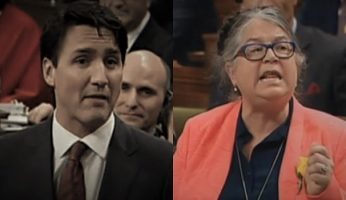
Canada’s “Feminist” Prime Minister Justin Trudeau (Part Two)
On the face of it, being in the Government’s Cabinet doesn’t just pay substantially better than being a Member of Parliament, it carries a great deal of power. After all, it is the PM & Cabinet who decide policy and law.
Cabinet Ministers can be fired for cause — they sit at the table where policy is made, and they’re are not allowed to disagree with Government policy, ever. Even if every member of the riding that elected them begs them to vote against a law the Government is putting through, even if the Minister agrees, to vote against such a law in Parliament would lose their Cabinet post.
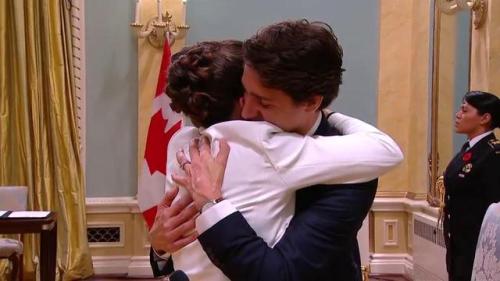
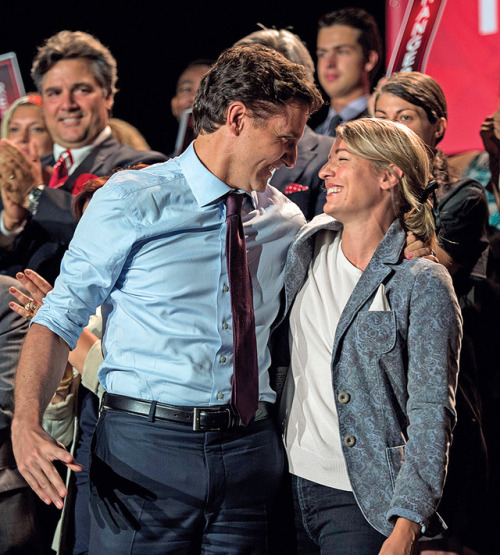
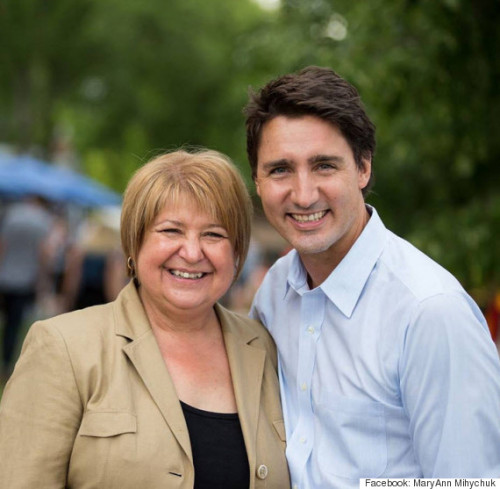
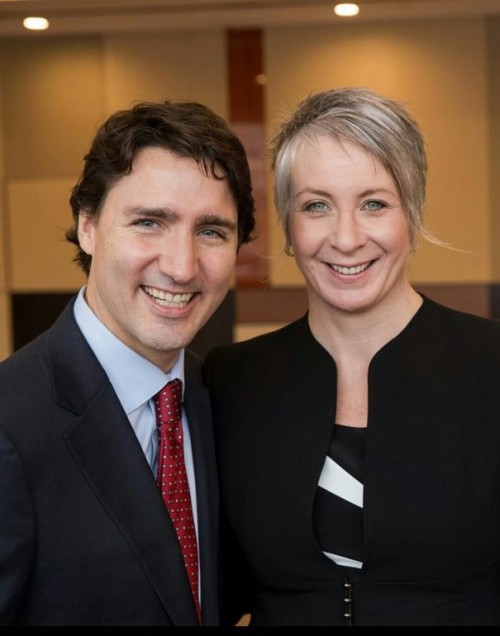
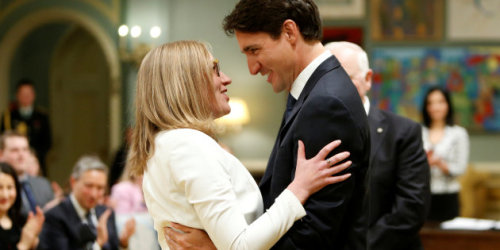
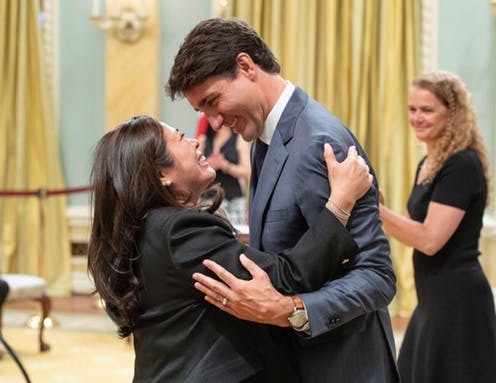
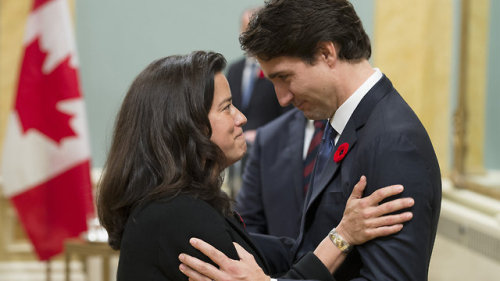
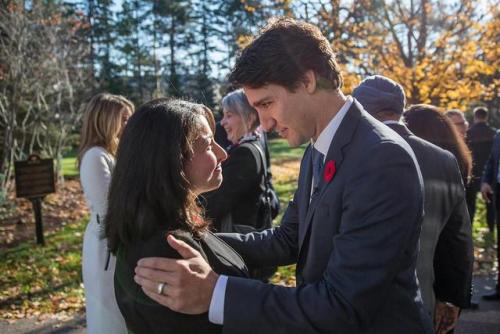
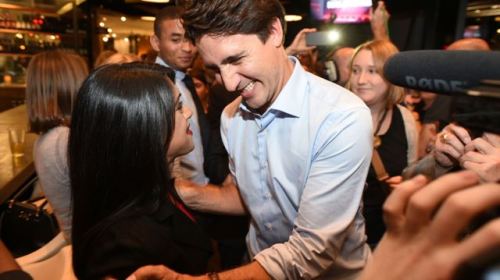
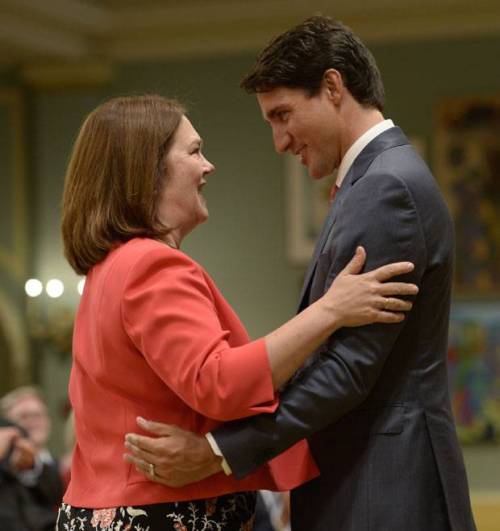
Perhaps growing up in a big family has left me with stronger than usual aversion to having personal boundaries breached. I’ve chosen the photographs I have because I personally find most of them extremely creepy. These photographs show the Prime Minister getting right in people’s faces. In the nose to nose shots he’s gone way past personal distance as he gets right into people’s intimate space.
In all fairness there are a few photos like this where he gets disturbingly close to men as well, so I imagine this is just his style. Nonetheless, it is totally inappropriate in the workplace. No employer should use his unequal power and privilege to overstep the personal boundaries of women— or men— who are effectively his employees.
“The Prime Minister and the Ministers he or she chooses form the Cabinet. The Prime Minister also appoints Ministers of State to assist individual Cabinet Ministers. Persons appointed to the Cabinet are generally elected Members of Parliament, although it is customary for the Prime Minister to appoint at least one Senator to the Cabinet. Ministers serve “at the pleasure” of the Prime Minister, who may replace them or request their resignation at any time. The Prime Minister may also redefine ministerial portfolios and determine the size of the Cabinet as he or she sees fit.” —Executive Branch of Government in Canada
Employment law protects most people from being fired on a whim, but like a medieval monarch, Prime Minister Trudeau has the unquestioned power to fire any Cabinet Minister at any time. For any reason. Or none.
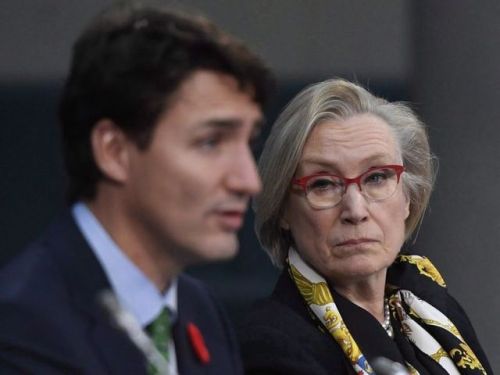
15 of the 20 Cabinet female Cabinet Ministers are pictured in our Feminist PM’s embrace in these two posts.
What happens to the women in Cabinet who are made uncomfortable by the imposition of such physical intimacy in the workplace? Perhaps women MPs who mark their personal boundaries never make it into the Cabinet.
I don’t think my definition of feminism is the same as Mr Trudeau’s.
Prime Minister Justin Trudeau is pictured above with female Cabinet Ministers:
Kirsty Duncan Minister of Science November 4, 2015–July 18, 2018 Minister of Sport and Persons with Disabilities January 25, 2018–July 18, 2018 Minister of Science and Sport July 18, 2018 – Present
Mélanie Joly Minister of Canadian Heritage November 4, 2015 – July 18, 2018 Minister of Tourism, Official Languages and La Francophonie July 18, 2018 – Present
Carla Qualtrough Minister of Sport and Persons with Disabilities November 4, 2015–August 28, 2017 Minister of Public Services and Procurement and Accessibility[b] August 28, 2017 – Present Receiver General for Canada August 28, 2017 – Present
Ginette C. Petitpas Taylor Minister of Health August 28, 2017 – Present
Bernadette Jordan Minister of Rural Economic Development January 14, 2019–
MaryAnn Mihychuk Minister of Employment, Workforce and Labour November 4, 2015–January 10, 2017
Filomena Tassi Minister of Seniors July 18, 2018 – Present
Diane Lebouthillier Minister of National Revenue November 4, 2015 – Present
Carolyn Bennett Minister of Crown-Indigenous Relations[a] November 4, 2015 – Present
During the 1930s, the WPA sponsored horseback librarians – all women –
to visit rural Americans, bringing them books; the librarians were only
allowed to make deliveries in counties that had existing libraries, so
schools and other institutions donated materials to establish libraries
that would make their counties eligible.
The program ran until 1943, and, as with many WPA programs, it was
lavishly documented by talented photographers, as a reminder to all of
us in their future that America is a place where we take care of each
other.
Canada’s “Feminist” Prime Minister Justin Trudeau (Part One)
Even though the Liberal MPs elected weren’t anywhere close to gender parity in Parliament in 2015, about a quarter of LPC MPs being women, there was a big todo made about Mr Trudeau’s choice of a cabinet that was half male & half female.
The Prime Minister has gotten a lot of ink about his gender parity cabinet, and his insistence that he is a feminist.
Prime Minister Justin Trudeau is pictured above with female Cabinet Ministers:
The Honourable Karina Gould, Minister of Democratic Institutions January 10, 2017 – Present
The Honourable Marie-Claude Bibeau Minister of International Development November 4, 2015 – Present
The Honourable Mary F.Y. Ng Minister of Small Business and Export Promotion July 18, 2018 – Present
The Honourable Jody Wilson-Raybould Minister of Justice and Attorney General of Canada Nov 4, 2015 – Jan 14, 2019 Minister of Veterans Affairs January 14, 2019 – Present Associate Minister of National Defence January 14, 2019 – Present
The Honourable Catherine McKenna Minister of Environment and Climate Change November 4, 2015 – Present
The Honourable Chrystia Freeland Minister of Foreign Affairs January 10, 2017 – Present
The Honourable Maryam Monsef Minister of Democratic Institutions November 4, 2015 – January 10, 2017 Minister of Status of Women January 10, 2017 – Present
The Honourable Bardish Chagger Minister of Small Business and Tourism November 4, 2015–July 18, 2018 Leader of the Government in the House of Commons August 19, 2016 – Present
The Honourable Jane Philpott Minister of Health November 4, 2015 – August 28, 2017 Minister of Indigenous Services August 28, 2017 – January 14, 2019 President of the Treasury Board January 2019 – Present
The Honourable Judy Foote Receiver General for Canada November 4, 2015 – August 24, 2017 Minister of Public Services and Procurement and Accessibility[b] November 4, 2015 – August 24, 2017
Canada’s “Feminist” Prime Minister Justin Trudeau (Part One)
Even though the Liberal MPs elected weren’t anywhere close to gender parity in Parliament in 2015, about a quarter of LPC MPs being women, there was a big todo made about Mr Trudeau’s choice of a cabinet that was half male & half female.
The Prime Minister has gotten a lot of ink about his gender parity cabinet, and his insistence that he is a feminist.
Prime Minister Justin Trudeau is pictured above with female Cabinet Ministers:
The Honourable Karina Gould, Minister of Democratic Institutions January 10, 2017 – Present
The Honourable Marie-Claude Bibeau Minister of International Development November 4, 2015 – Present
The Honourable Mary F.Y. Ng Minister of Small Business and Export Promotion July 18, 2018 – Present
The Honourable Jody Wilson-Raybould Minister of Justice and Attorney General of Canada Nov 4, 2015 – Jan 14, 2019 Minister of Veterans Affairs January 14, 2019 – Present Associate Minister of National Defence January 14, 2019 – Present
The Honourable Catherine McKenna Minister of Environment and Climate Change November 4, 2015 – Present
The Honourable Chrystia Freeland Minister of Foreign Affairs January 10, 2017 – Present
The Honourable Maryam Monsef Minister of Democratic Institutions November 4, 2015 – January 10, 2017 Minister of Status of Women January 10, 2017 – Present
The Honourable Bardish Chagger Minister of Small Business and Tourism November 4, 2015–July 18, 2018 Leader of the Government in the House of Commons August 19, 2016 – Present
The Honourable Jane Philpott Minister of Health November 4, 2015 – August 28, 2017 Minister of Indigenous Services August 28, 2017 – January 14, 2019 President of the Treasury Board January 2019 – Present
The Honourable Judy Foote Receiver General for Canada November 4, 2015 – August 24, 2017 Minister of Public Services and Procurement and Accessibility[b] November 4, 2015 – August 24, 2017
We have an Eero system in our house; it does really good and reliable
wifi distribution, including to my office in the garage. And it was nice
to have a piece of home electronics that was neither from one of the
great data-sucking companies like Google, nor from the control-freak
companies like Apple – and also not from a no-name white-label
re-badger or a giant shitty telco switch company whose consumer products
arm is an afterthought.
Now Eero is to become a part of Amazon, and Amazon explains that the
idea is to help the company become better at dominating the Internet of
Shit, which means that it’s going to go way up on both the surveillance
and control-freak league tables, and take Eero with it. The company
promises that it’s not going to revise Eero’s (exemplary) privacy policy
– but this is the same company that promised it would drop Audible’s
DRM 11 years ago and not only hasn’t done so, it also won’t answer
questions about why it hasn’t.
And as Dieter Bohn writes in The Verge, there’s more than one way to spy
on your with an Eero – it doesn’t have to monitor your traffic, it
could enumerate the devices, and/or look at flows of data rather than
content, and/or connect Eero data to the many other data-streams that
Amazon sucks out of your life.
It’s just a minor annoyance – yet another device I’m going to be in the
market to replace with something that has no Alexa support or support
for any other company’s surveillance/silo strategy – but it’s also a
good candidate for this month’s poster child for trustbusting. Companies should not be able to grow by buying up nascent competitors.
This does not produce a good outcome for consumers, nor for markets. It
corrodes our politics and limits our imaginations. It deters the right
kind of entrepreneurs (those who want to grow by serving customers) and
encourages the wrong kind (growth through providing missing
puzzle-pieces to already-bloated giants).
We have this crazy idea that infinite growth is possible in a finite universe.
Perhaps the biggest tragedy of the Internet generation tech world (after eroding personal privacy on the road to an Orwellian dystopia) is the idea that start ups exist to be bought by some monster company.
This isn’t a sometime thing: it is *the* business model of today.
Imagine that: coming up with a cool tech idea or invention, scratching up a prototype, putting it all together in your garage on your own dime or finding some seed money… not to develop a viable business to carry on doing what its doing for decades, but to deliver a fast return on the investment so its bought up by one of the digital giants, to be developed or, more likely to be crated up and stashed in a Raiders Of The Lost Ark style warehouse so it doesn’t mess with the monster company’s business plans.
And here’s the thing: each of those monster companies— whose tentacles are stretching across the world— has but one goal: to become *the* digital monopoly. We might realize some short term gains when they go head to head in this modern day battle of the titans, but once there’s a single winner left standing, it will be game over for us.
The only real way to stop any of this would be for governments to rein it in. Unfortunately the “free world” is dominated by the shortsighted governments that have no comprehension of the big picture, and few if any elected Representatives that even understand technology, so they effectively allow these companies experts to dictate the laws that are supposed to regulate them, and helping these corporate sociopaths grow “to big to fail.”
Nicolás Maduro’s government actually requested that the UN send election observers to monitor the election and ensure a fair and honest vote. It was the faction that Canada and the US now support who opposed having UN observers present.
Backing a coup in Venezuela is a violation of international law. Ask yourself how you would feel if a foreign nation proclaimed that they would decide for you who runs your country and ignore the results of your own elections.
For the sake of the Venezuelan people, the region, and for the principle of national sovereignty, these international actors should instead support negotiations between the Venezuelan government and its opponents.
The following open letter—signed by 70 scholars on Latin America, political science, and history as well as filmmakers, civil society leaders, and other experts—was issued on Thursday, January 24, 2019 in opposition to ongoing intervention by the United States in Venezuela.
The United States government must cease interfering in Venezuela’s internal politics, especially for the purpose of overthrowing the country’s government. Actions by the Trump administration and its allies in the hemisphere are almost certain to make the situation in Venezuela worse, leading to unnecessary human suffering, violence, and instability.
Venezuela’s political polarization is not new; the country has long been divided along racial and socioeconomic lines. But the polarization has deepened in recent years. This is partly due to US support for an opposition strategy aimed at removing the government of Nicolás Maduro through extra-electoral means. While the opposition has been divided on this strategy, US support has backed hardline opposition sectors in their goal of ousting the Maduro government through often violent protests, a military coup d’etat, or other avenues that sidestep the ballot box.
“Actions by the Trump administration and its allies in the hemisphere are almost certain to make the situation in Venezuela worse, leading to unnecessary human suffering, violence, and instability.”
Under the Trump administration, aggressive rhetoric against the Venezuelan government has ratcheted up to a more extreme and threatening level, with Trump administration officials talking of “military action” and condemning Venezuela, along with Cuba and Nicaragua, as part of a “troika of tyranny.” Problems resulting from Venezuelan government policy have been worsened by US economic sanctions, illegal under the Organization of American States and the United Nations ― as well as US law and other international treaties and conventions. These sanctions have cut off the means by which the Venezuelan government could escape from its economic recession, while causing a dramatic falloff in oil production and worsening the economic crisis, and causing many people to die because they can’t get access to life-saving medicines. Meanwhile, the US and other governments continue to blame the Venezuelan government ― solely ― for the economic damage, even that caused by the US sanctions.
Now the US and its allies, including Organization of American States (OAS) Secretary General Luis Almagro and Brazil’s far-right president, Jair Bolsonaro, have pushed Venezuela to the precipice. By recognizing National Assembly President Juan Guaido as the new president of Venezuela ― something illegal under the OAS Charter ― the Trump administration has sharply accelerated Venezuela’s political crisis in the hopes of dividing the Venezuelan military and further polarizing the populace, forcing them to choose sides. The obvious, and sometimes stated goal, is to force Maduro out via a coup d’etat.
The reality is that despite hyperinflation, shortages, and a deep depression, Venezuela remains a politically polarized country. The US and its allies must cease encouraging violence by pushing for violent, extralegal regime change. If the Trump administration and its allies continue to pursue their reckless course in Venezuela, the most likely result will be bloodshed, chaos, and instability. The US should have learned something from its regime change ventures in Iraq, Syria, Libya, and its long, violent history of sponsoring regime change in Latin America.
Neither side in Venezuela can simply vanquish the other. The military, for example, has at least 235,000 frontline members, and there are at least 1.6 million in militias. Many of these people will fight, not only on the basis of a belief in national sovereignty that is widely held in Latin America ― in the face of what increasingly appears to be a US-led intervention ― but also to protect themselves from likely repression if the opposition topples the government by force.
In such situations, the only solution is a negotiated settlement, as has happened in the past in Latin American countries when politically polarized societies were unable to resolve their differences through elections. There have been efforts, such as those led by the Vatican in the fall of 2016, that had potential, but they received no support from Washington and its allies who favored regime change. This strategy must change if there is to be any viable solution to the ongoing crisis in Venezuela.
For the sake of the Venezuelan people, the region, and for the principle of national sovereignty, these international actors should instead support negotiations between the Venezuelan government and its opponents that will allow the country to finally emerge from its political and economic crisis.
Signed:
Noam Chomsky, Professor Emeritus, MIT and Laureate Professor, University of Arizona Laura Carlsen, Director, Americas Program, Center for International Policy Greg Grandin, Professor of History, New York University Miguel Tinker Salas, Professor of Latin American History and Chicano/a Latino/a Studies at Pomona College Sujatha Fernandes, Professor of Political Economy and Sociology, University of Sydney Steve Ellner, Associate Managing Editor of Latin American Perspectives Alfred de Zayas, former UN Independent Expert on the Promotion of a Democratic and Equitable International Order and only UN rapporteur to have visited Venezuela in 21 years Boots Riley, Writer/Director of Sorry to Bother You, Musician John Pilger, Journalist & Film-Maker Mark Weisbrot, Co-Director, Center for Economic and Policy Research Jared Abbott, PhD Candidate, Department of Government, Harvard University Dr. Tim Anderson, Director, Centre for Counter Hegemonic Studies Elisabeth Armstrong, Professor of the Study of Women and Gender, Smith College Alexander Aviña, PhD, Associate Professor of History, Arizona State University Marc Becker, Professor of History, Truman State University Medea Benjamin, Cofounder, CODEPINK Phyllis Bennis, Program Director, New Internationalism, Institute for Policy Studies Dr. Robert E. Birt, Professor of Philosophy, Bowie State University Aviva Chomsky, Professor of History, Salem State University James Cohen, University of Paris 3 Sorbonne Nouvelle Guadalupe Correa-Cabrera, Associate Professor, George Mason University Benjamin Dangl, PhD, Editor of Toward Freedom Dr. Francisco Dominguez, Faculty of Professional and Social Sciences, Middlesex University, UK Alex Dupuy, John E. Andrus Professor of Sociology Emeritus, Wesleyan University Jodie Evans, Cofounder, CODEPINK Vanessa Freije, Assistant Professor of International Studies, University of Washington Gavin Fridell, Canada Research Chair and Associate Professor in International Development Studies, St. Mary’s University Evelyn Gonzalez, Counselor, Montgomery College Jeffrey L. Gould, Rudy Professor of History, Indiana University Bret Gustafson, Associate Professor of Anthropology, Washington University in St. Louis Peter Hallward, Professor of Philosophy, Kingston University John L. Hammond, Professor of Sociology, CUNY Mark Healey, Associate Professor of History, University of Connecticut Gabriel Hetland, Assistant Professor of Latin American, Caribbean and U.S. Latino Studies, University of Albany Forrest Hylton, Associate Professor of History, Universidad Nacional de Colombia-Medellín Daniel James, Bernardo Mendel Chair of Latin American History Chuck Kaufman, National Co-Coordinator, Alliance for Global Justice Daniel Kovalik, Adjunct Professor of Law, University of Pittsburgh Winnie Lem, Professor, International Development Studies, Trent University Dr. Gilberto López y Rivas, Professor-Researcher, National University of Anthropology and History, Morelos, Mexico Mary Ann Mahony, Professor of History, Central Connecticut State University Jorge Mancini, Vice President, Foundation for Latin American Integration (FILA) Luís Martin-Cabrera, Associate Professor of Literature and Latin American Studies, University of California San Diego Teresa A. Meade, Florence B. Sherwood Professor of History and Culture, Union College Frederick Mills, Professor of Philosophy, Bowie State University Stephen Morris, Professor of Political Science and International Relations, Middle Tennessee State University Liisa L. North, Professor Emeritus, York University Paul Ortiz, Associate Professor of History, University of Florida Christian Parenti, Associate Professor, Department of Economics, John Jay College CUNY Nicole Phillips, Law Professor at the Université de la Foundation Dr. Aristide Faculté des Sciences Juridiques et Politiques and Adjunct Law Professor at the University of California Hastings College of the Law Beatrice Pita, Lecturer, Department of Literature, University of California San Diego Margaret Power, Professor of History, Illinois Institute of Technology Vijay Prashad, Editor, The TriContinental Eleanora Quijada Cervoni FHEA, Staff Education Facilitator & EFS Mentor, Centre for Higher Education, Learning & Teaching at The Australian National University Walter Riley, Attorney and Activist William I. Robinson, Professor of Sociology, University of California, Santa Barbara Mary Roldan, Dorothy Epstein Professor of Latin American History, Hunter College/ CUNY Graduate Center Karin Rosemblatt, Professor of History, University of Maryland Emir Sader, Professor of Sociology, University of the State of Rio de Janeiro Rosaura Sanchez, Professor of Latin American Literature and Chicano Literature, University of California, San Diego T.M. Scruggs Jr., Professor Emeritus, University of Iowa Victor Silverman, Professor of History, Pomona College Brad Simpson, Associate Professor of History, University of Connecticut Jeb Sprague, Lecturer, University of Virginia Kent Spriggs, International human rights lawyer Christy Thornton, Assistant Professor of History, Johns Hopkins University Sinclair S. Thomson, Associate Professor of History, New York University Steven Topik, Professor of History, University of California, Irvine Stephen Volk, Professor of History Emeritus, Oberlin College Kirsten Weld, John. L. Loeb Associate Professor of the Social Sciences, Department of History, Harvard University Kevin Young, Assistant Professor of History, University of Massachusetts Amherst Patricio Zamorano, Academic of Latin American Studies; Executive Director, InfoAmericas
For context, we can look at all of the other relevant examples of this sort of thing in the region, which have harmed democracy and cost many thousands of lives just to support corporate imperialism. Pretending that this time will be different is ludicrous.
I highly recommend making time to watch John Pilger’s excellent documentary about decades of US assaults on democracy in South America, “The War on Democracy” which can be watched for free on Vimeo here: https://vimeo.com/16724719
By restricting Venezuelans in Canada from casting their votes through the Venezuelan embassy, the Canadian government effectively deemed Venezuelan elections fraudulent before they even took place. This is not how international law works.
“Guatemala’s President, Jimmy Morales, dismantled a United Nations anti-corruption group and barred its head from entering the country.
“Honduras’s President, Juan Orlando Hernandez, took power in 2014 after a dubious election and violent crackdown on dissent, then ignored his country’s constitution to win re-election in 2017.
“Brazil’s new President, Jair Bolsonaro, has not only publicly attacked women, gay people, immigrants and people of colour, he has also expressed support for torture and his country’s military dictatorship.
“Colombia has witnessed the execution of 120 human-rights leaders in the past two years.
“Is Ms. Freeland promoting democracy in those countries?”